Traditional Hymns
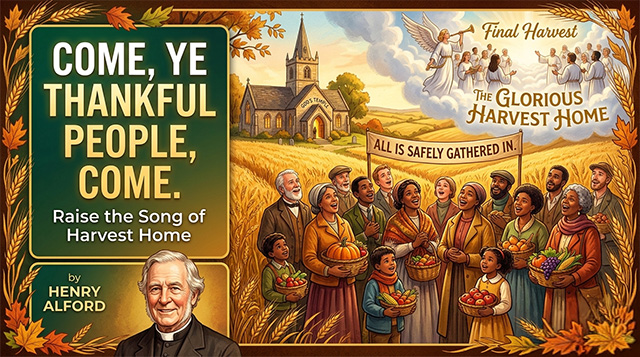
Come, Ye Thankful People, Come
Come, Ye Thankful People, Come
Listen to:
 Come, Ye Thankful People, Come Piano (.mp3)
Come, Ye Thankful People, Come (.midi)
Come, Ye Thankful People, Come (.mp3)
Come, Ye Thankful People, Come Bells Version (.mp3)
1. Come, ye thankful people, come, raise the song of harvest home; all is safely gathered in, ere the winter storms begin. God our Maker doth provide for our wants to be supplied; come to God's own temple, come, raise the song of harvest home.
2. All the world is God's own field, fruit as praise to God we yield; wheat and tares together sown are to joy or sorrow grown; first the blade and then the ear, then the full corn shall appear; Lord of harvest, grant that we wholesome grain and pure may be.
3. For the Lord our God shall come, and shall take the harvest home; from the field shall in that day all offenses purge away, giving angels charge at last in the fire the tares to cast; but the fruitful ears to store in the garner evermore.
4. Even so, Lord, quickly come, bring thy final harvest home; gather thou thy people in, free from sorrow, free from sin, there, forever purified, in thy presence to abide; come, with all thine angels, come, raise the glorious harvest home.
Story of the hymn Come, Ye Thankful People, Come
Henry Alford's Background
Alford came from a long line of Church of England clergymen—his father, grandfather, and great-grandfather were all ministers. His mother died shortly after his birth, so he was raised primarily by his father and uncle.At just 16 years old (in 1826), young Henry showed remarkable faith and determination. He inscribed a bold statement in his Bible: a declaration of his commitment to serve God, reflecting his deep sense of calling from an early age. Alford was a gifted scholar who later became Dean of Canterbury Cathedral.
He served as vicar in rural parishes, including Wymeswold in Leicestershire (for about 18 years) and Aston Sandford in Buckinghamshire. In these countryside settings, he was closely connected to the rhythms of agricultural life and the traditional English "Harvest Home" festivals, where communities celebrated the safe gathering of crops in late September with thanksgiving services in church.
The Hymn's Origin
In the fall of 1844, while serving in his first charge, Alford wrote the hymn specifically for a local harvest festival celebrating an abundant crop. The people of the hamlet had gathered their harvest into the barns and held a joyful thanksgiving service, displaying produce in church and sharing with the needy.He originally titled it "After Harvest" and published it that same year in his collection Psalms and Hymns with seven stanzas. The hymn draws on rural harvest imagery but moves deeper, using the biblical Parable of the Wheat and the Tares (Matthew 13:24–30) to connect the earthly harvest to the final spiritual harvest at Christ's return—separating the "wheat" (the righteous) from the "tares" (weeds or wicked). Alford revised the text over time (notably in 1865 and around 1868), shortening it in some editions to four stanzas, and it appeared in various hymnals with minor changes by him and others.