Traditional Hymns
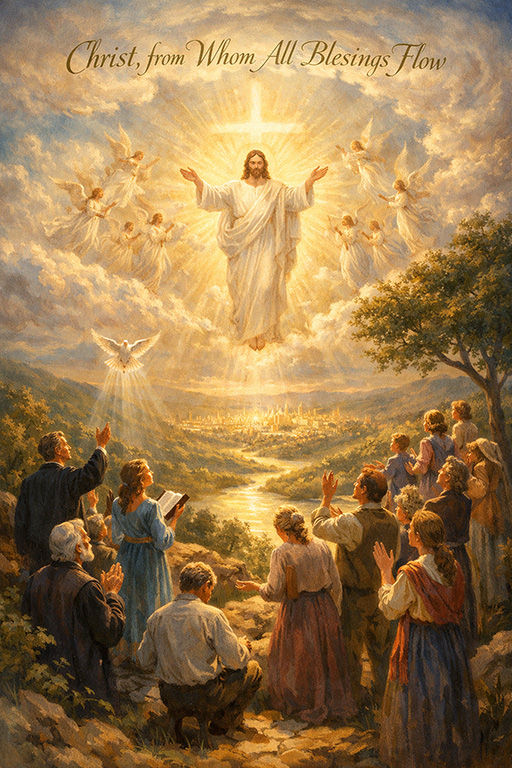
Christ, from Whom All Blessings Flow
Christ, from Whom All Blessings Flow
Listen to:
 Christ, from Whom All Blessings Flow (.midi) Christ, from Whom All Blessings Flow (.mp3) Christ, from Whom All Blessings Flow Bells Version (.mp3)
1. Christ, from whom all blessings flow, perfecting the saints below, hear us, who thy nature share, who thy mystic body are.
2. Join us, in one spirit join, let us still receive of thine; still for more on thee we call, thou who fillest all in all.
3. Move and actuate and guide, diverse gifts to each divide; placed according to thy will, let us all our work fulfill;
4. Never from thy service move, needful to each other prove; use the grace on each bestowed, tempered by the art of God.
5. Many are we now, and one, we who Jesus have put on; there is neither bond nor free, male nor female, Lord, in thee.
6. Love, like death, hath all destroyed, rendered all distinctions void; names and sects and parties fall; thou, O Christ, art all in all!
Story of the hymn Christ, from Whom All Blessings Flow
The hymn "Christ, from Whom All Blessings Flow" was first published in 1740 in the collection Hymns and Sacred Poems, co-authored by Charles and John Wesley.It appeared as the concluding section of a longer, four-part hymn titled "The Communion of Saints," which consisted of 13 stanzas exploring Christian fellowship and unity. This original context reflects the early Methodist emphasis on the "communion of saints"—the spiritual bond among believers as members of Christ's body.
The opening line echoes the famous Doxology by Thomas Ken ("Praise God, from whom all blessings flow"), but Wesley shifts the focus entirely to Christ as the source of all spiritual gifts and unity within the church. Drawing from biblical passages like 1 Corinthians 12 (diversity of gifts in one body), Galatians 3:28 (no distinctions in Christ), and Colossians 3:11, the hymn celebrates how Christ perfects believers, knits them together, and transcends human divisions.
A particularly powerful influence on the hymn's closing stanza comes from a poem by Matthew Prior (1664-1721), where the lines "Love, like death, hath all destroyed, / Rendered all distinctions void" are adapted to emphasize Christ's unifying love.
In an era of religious sectarianism, Wesley used this to affirm that in Christ, "names, and sects, and parties fall"-a bold call for ecumenical unity that resonates even today.