Traditional Hymns
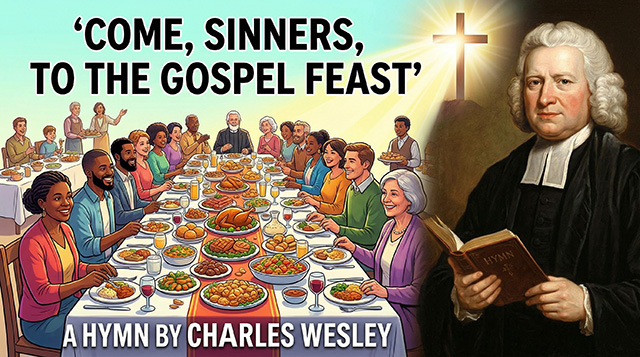
Come, Sinners, to the Gospel Feast
Come, Sinners, to the Gospel Feast
Listen to:
 Come, Sinners, to the Gospel Feast Organ (.mp3)
Come, Sinners, to the Gospel Feast (.midi)
Come, Sinners, to the Gospel Feast (.mp3)
Come, Sinners, to the Gospel Feast Bells Version (.mp3)
1. Come, sinners, to the gospel feast; let every soul be Jesus' guest. Ye need not one be left behind, for God hath bid all humankind.
2. Sent by my Lord, on you I call; the invitation is to all. Come, all the world! Come, sinner, thou! All things in Christ are ready now.
3. Come, all ye souls by sin oppressed, ye restless wanderers after rest; ye poor, and maimed, and halt, and blind, in Christ a hearty welcome find.
4. My message as from God receive; ye all may come to Christ and live. O let his love your hearts constrain, nor suffer him to die in vain.
5. This is the time, no more delay! This is the Lord's accepted day. Come thou, this moment, at his call, and live for him who died for all.
Story of the hymn "Come, Sinners, to the Gospel Feast"
"Come, Sinners, to the Gospel Feast" is one of Charles Wesley's most powerful evangelistic invitation hymns. It was written in 1747 during the early years of the Methodist revival in England, a time of fervent preaching, open-air meetings, and rapid growth of the movement led by Charles and his brother John Wesley.Biblical Inspiration
The hymn directly expands on Jesus' Parable of the Great Banquet (or Great Supper) found in Luke 14:16-24. In the parable, a man prepares a great feast and invites many guests, but they make excuses and refuse to come. The host then sends his servant to invite the poor, the crippled, the blind, and the lame from the streets and alleys—and finally, to compel people from the highways and hedges so that the house may be filled.Charles Wesley transforms this story into a vivid, urgent call to salvation. He portrays the "gospel feast" as the free offer of God's grace in Christ—available to all sinners without exception. The hymn emphasizes universal invitation ("God hath bidden all mankind"), the readiness of salvation ("All things in Christ are ready now"), and the welcoming of the marginalized ("ye poor, and maimed, and halt, and blind"). It also carries strong Eucharistic (Communion) overtones, inviting people to "taste and see" God's goodness by partaking in Christ's body and blood.
Publication and Original Form
Wesley first published the hymn in his 1747 collection Hymns for Those that Seek and Those that Have Redemption in the Blood of Jesus Christ (often called the Redemption Hymns). It originally appeared with the heading "Hymn 50, The Great Supper, [Luke 14:16-24]" and contained up to 24 stanzas in its fullest form—an expansive poetic meditation on the parable and the gospel message.Later, in the influential Collection of Hymns for the Use of the People Called Methodists (1780), nine stanzas were selected. Modern hymnals typically use a shorter version (often 4–6 stanzas), focusing on the core invitation.